
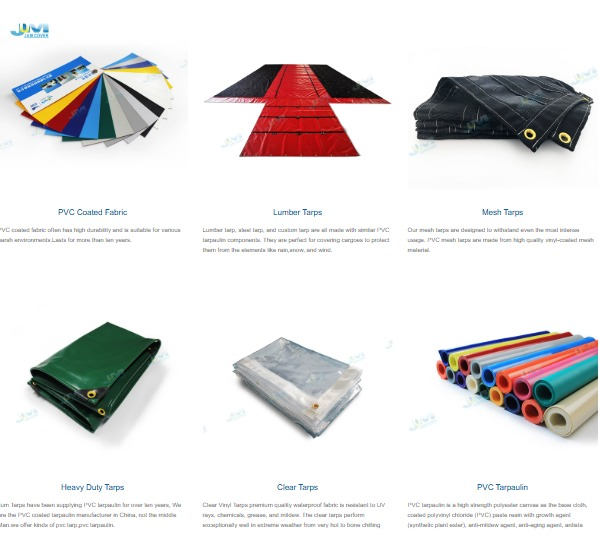
PVC tarpaulin products have become essential across numerous industries, including transportation, agriculture, construction, logistics, and outdoor applications. Their durability, waterproof properties, UV resistance, and flexibility make them a preferred choice for businesses worldwide. Behind every high-quality tarpaulin lies a sophisticated production process carried out by a professional PVC Tarpaulin Manufacturer. Understanding how these products are made offers valuable insight into the quality standards and technological advancements involved in modern manufacturing facilities.
Leading companies such as Jumtarps have established advanced production facilities designed to ensure consistency, durability, and superior product performance. This article explores the complete manufacturing journey inside a state-of-the-art PVC Tarpaulin Manufacturer facility.
Raw Material Selection: The Foundation of Quality
The manufacturing process begins with the careful selection of raw materials. A reputable PVC Tarpaulin Manufacturer understands that product quality largely depends on the materials used.
The primary components include:
- Polyvinyl Chloride (PVC) resin
- High-strength polyester fabric
- Plasticizers
- UV stabilizers
- Flame retardants
- Pigments and color additives
- Anti-fungal and anti-mildew agents
Premium-grade polyester yarn is selected to provide excellent tensile strength and tear resistance. The PVC resin and additives are chosen based on the intended application, whether for truck covers, tents, inflatable structures, or industrial canopies.
Companies like Jumtarps maintain strict quality control measures to ensure all incoming raw materials meet international standards before entering production.
Polyester Yarn Preparation and Weaving
After material selection, the polyester yarn undergoes preparation for weaving. This stage is critical because the fabric serves as the structural backbone of the finished tarpaulin.
Modern weaving machines interlace warp and weft yarns to create a strong base fabric. The weaving density can vary depending on customer requirements and application needs.
Common fabric constructions include:
High-Density Weaving for Industrial Applications
Industrial-grade tarpaulins require tightly woven fabrics capable of withstanding heavy loads and harsh weather conditions.
Lightweight Weaving for Flexible Uses
Applications such as tents, advertising banners, and temporary shelters often utilize lighter woven structures for improved flexibility.
A professional PVC Tarpaulin Manufacturer continuously monitors yarn tension, weave density, and fabric uniformity during this process to guarantee consistent quality.
Fabric Inspection and Quality Assessment
Before coating, the woven fabric undergoes rigorous inspection.
Advanced inspection systems identify defects such as:
- Broken yarns
- Uneven weaving
- Surface irregularities
- Color inconsistencies
Any defective material is removed immediately to maintain product reliability. Leading manufacturers like Jumtarps utilize automated quality inspection systems alongside manual assessments to ensure precision.
PVC Coating and Lamination Process
The coating stage represents one of the most important operations inside a PVC Tarpaulin Manufacturer facility.
During this process, liquid PVC compounds are applied to both sides of the polyester fabric. The coating provides waterproofing, weather resistance, and enhanced durability.
There are two major production methods.
Knife Coating Technology
Knife coating involves spreading a controlled layer of PVC paste over the fabric using precision blades. The thickness is adjusted according to product specifications.
This method offers:
- Excellent surface smoothness
- Superior durability
- Enhanced weather resistance
- Greater dimensional stability
Hot Lamination Technology
Hot lamination bonds pre-formed PVC films onto the fabric using heat and pressure.
Advantages include:
- Cost efficiency
- High production speed
- Consistent coating thickness
- Excellent waterproof performance
A leading PVC Tarpaulin Manufacturer often employs both technologies to meet diverse customer demands.
Heating and Drying Operations
Once coated, the material enters large industrial ovens.
These high-temperature chambers perform several functions:
- Curing the PVC coating
- Evaporating solvents
- Strengthening the bond between fabric and coating
- Stabilizing the material structure
Precise temperature control is essential. Excessive heat can damage the fabric, while insufficient curing may reduce product performance.
Facilities operated by Jumtarps utilize advanced temperature management systems to maintain optimal curing conditions throughout production.
Surface Treatment and Finishing
Following curing, the tarpaulin receives additional surface treatments designed to improve functionality.
Common treatments include:
UV Protection Coating
UV-resistant additives help extend product lifespan by preventing degradation caused by prolonged sunlight exposure.
Anti-Fungal Treatment
Tarpaulins used in humid environments often require anti-fungal protection to inhibit mold and mildew growth.
Flame Retardant Finishing
Certain industrial and transportation applications demand flame-retardant properties to comply with safety regulations.
Lacquering
Protective lacquer coatings improve surface gloss, enhance dirt resistance, and simplify cleaning.
An experienced PVC Tarpaulin Manufacturer customizes these treatments according to customer specifications and industry requirements.
Embossing and Surface Texturing
Some products undergo embossing to create specific surface textures.
Embossing serves several purposes:
- Enhanced aesthetics
- Improved anti-slip properties
- Increased abrasion resistance
- Better printability
Popular textures include matte, glossy, and patterned finishes.
Modern manufacturing facilities use precision embossing rollers to achieve consistent surface appearances across large production volumes.
Cooling and Dimensional Stabilization
After coating and finishing, the material must cool gradually.
Controlled cooling prevents:
- Warping
- Shrinkage
- Surface distortion
- Internal stress formation
A reliable PVC Tarpaulin Manufacturer employs automated cooling systems to ensure dimensional stability before the material advances to the next production stage.
Final Inspection and Laboratory Testing
Quality assurance remains a cornerstone of every leading PVC Tarpaulin Manufacturer.
Before packaging, finished products undergo extensive testing within dedicated laboratories.
Typical evaluations include:
Tensile Strength Testing
Measures the force required to break the material.
Tear Resistance Testing
Determines the material’s ability to resist propagation of tears.
Waterproof Performance Testing
Confirms complete resistance to water penetration.
UV Aging Tests
Simulates prolonged outdoor exposure to evaluate long-term durability.
Adhesion Strength Testing
Assesses bonding quality between PVC layers and polyester fabric.
Companies such as Jumtarps conduct comprehensive testing procedures to ensure each product meets customer expectations and international quality standards.
Cutting, Packaging, and Customization
Once approved, the tarpaulin rolls proceed to cutting and finishing sections.
Customers often request customized features, including:
- Specific roll widths
- Custom lengths
- Eyelets
- Welded edges
- Reinforced hems
- Printed logos
- Special colors
Automated cutting equipment guarantees precise dimensions while minimizing material waste.
Finished products are then carefully packaged to protect them during transportation and storage.
Sustainable Manufacturing Practices
Modern PVC Tarpaulin Manufacturer facilities increasingly focus on environmental responsibility.
Sustainable initiatives commonly include:
- Recycling production waste
- Energy-efficient machinery
- Reduced solvent emissions
- Water conservation systems
- Eco-friendly formulations
Industry leaders like Jumtarps continuously invest in cleaner production technologies to minimize environmental impact while maintaining exceptional product quality.
Conclusion
The production of premium tarpaulin products involves far more than simple fabric coating. Every stage—from raw material selection and weaving to coating, finishing, testing, and packaging—requires precision, advanced technology, and strict quality control.
A trusted PVC Tarpaulin Manufacturer combines modern equipment, skilled personnel, and rigorous testing procedures to deliver durable and reliable products for global markets. Companies such as Jumtarps exemplify these manufacturing standards by operating advanced facilities dedicated to producing high-performance PVC tarpaulin solutions for a wide range of industrial applications.
Understanding this manufacturing process helps customers appreciate the expertise and innovation behind every high-quality PVC tarpaulin product.