
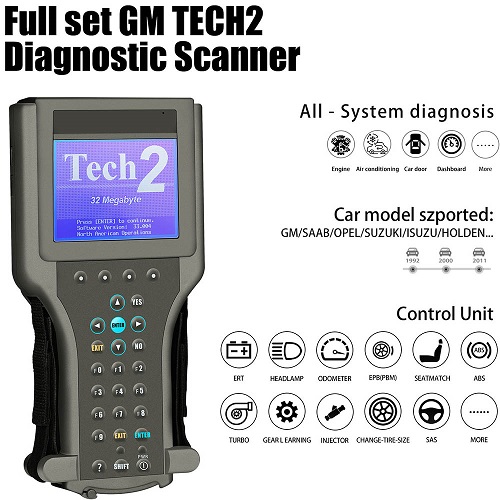
Understanding GM TECH2 and Its Role in Advanced Diagnostics
GM TECH2 is one of the most powerful diagnostic tools used for servicing General Motors vehicles, and it plays a crucial role in performing advanced vehicle tests. Technicians rely on GM TECH2 to communicate with vehicle control modules, retrieve fault codes, and execute system-level tests that go beyond basic scanning. Unlike simple OBD scanners, GM TECH2 provides deep access to manufacturer-specific systems, making it essential for accurate troubleshooting and repair.
Modern vehicles are controlled by multiple electronic control units (ECUs), and GM TECH2 allows technicians to interact with each of these systems individually. Whether it is the engine, transmission, ABS, airbag, or body control module, GM TECH2 enables advanced diagnostics that ensure precise problem identification.
Preparing GM TECH2 for Advanced Vehicle Testing
Before starting any diagnostic procedure using GM TECH2, proper setup is essential. The first step is connecting the GM TECH2 device to the vehicle’s diagnostic port, usually located under the dashboard. Once connected, the device must be powered either through the vehicle battery or an external power source depending on the configuration.
After powering on, GM TECH2 will prompt the user to select the vehicle’s make, model, and year. This step is critical because GM TECH2 uses this information to access the correct system database. Selecting incorrect vehicle data may result in incomplete or inaccurate test results.
Technicians also ensure that the software cartridges or memory cards in GM TECH2 are updated. Updated software allows GM TECH2 to support newer models and perform advanced vehicle tests without compatibility issues.
Performing System Scans with GM TECH2
One of the most common uses of GM TECH2 is performing a full system scan. This scan checks all vehicle modules for stored diagnostic trouble codes (DTCs). GM TECH2 not only reads these codes but also provides detailed descriptions that help technicians understand the root cause of a problem.
During a system scan, GM TECH2 communicates with each ECU and collects real-time data. This includes engine performance metrics, sensor readings, and system statuses. By analyzing this data, technicians can identify irregularities that may not trigger warning lights but still affect vehicle performance.
GM TECH2 also allows users to clear fault codes after repairs are completed, ensuring the vehicle systems are reset and functioning properly.
Advanced Functional Tests Using GM TECH2
GM TECH2 is widely used for advanced functional testing, which goes beyond basic diagnostics. These tests allow technicians to activate or control specific components directly from the device.
For example, GM TECH2 can activate fuel pumps, test cooling fans, cycle ABS solenoids, and operate injectors. These functional tests help verify whether individual components are working correctly without disassembling the vehicle.
Another important function of GM TECH2 is bi-directional control. This means the technician can send commands to the vehicle systems and observe how they respond in real time. This capability makes GM TECH2 extremely valuable for diagnosing complex electrical and mechanical issues.
Performing Module Programming and Reprogramming
One of the most advanced features of GM TECH2 is its ability to perform module programming and reprogramming. This is especially important when replacing or updating ECUs.
Using GM TECH2, technicians can reflash software in modules such as the engine control unit, transmission control module, and body control module. This ensures that all systems are running the latest manufacturer-approved software.
During programming, GM TECH2 must remain stable and connected to a reliable power source. Any interruption during this process can cause serious module failure. Therefore, careful preparation is necessary before starting programming tasks with GM TECH2.
Using GM TECH2 for Live Data Analysis
Live data analysis is another powerful feature of GM TECH2. It allows technicians to monitor real-time sensor data while the vehicle is running. This includes parameters such as engine RPM, throttle position, oxygen sensor readings, fuel trims, and temperature values.
GM TECH2 displays this information in a structured format, making it easier to detect abnormal readings. For example, if a sensor is reporting inconsistent values, GM TECH2 helps pinpoint whether the issue is with the sensor itself or another related system.
This real-time monitoring capability makes GM TECH2 essential for diagnosing intermittent problems that are difficult to reproduce.
Diagnosing Transmission and Engine Issues with GM TECH2
GM TECH2 is particularly effective in diagnosing transmission and engine-related problems. For engine diagnostics, it helps identify misfires, fuel delivery issues, ignition faults, and emission system errors.
For transmission systems, GM TECH2 can test shift solenoids, monitor gear engagement, and check hydraulic pressure readings. These advanced tests allow technicians to determine whether a transmission issue is mechanical or electronic in nature.
By using GM TECH2, repair accuracy improves significantly, reducing unnecessary part replacements and saving time.
Airbag and ABS System Testing with GM TECH2
Safety systems such as airbags and ABS require precise diagnostics, and GM TECH2 provides specialized functions for these systems. It can read airbag crash data, test sensor circuits, and verify deployment readiness.
For ABS systems, GM TECH2 can perform brake bleed procedures, activate ABS pumps, and test wheel speed sensors. These tests ensure that the vehicle’s safety systems are fully operational before returning the car to the road.
GM TECH2’s ability to access these critical systems makes it an essential tool in professional automotive workshops.
Troubleshooting Common Issues Using GM TECH2
When vehicles present complex or intermittent issues, GM TECH2 becomes a powerful troubleshooting companion. Technicians use it to compare live data against standard specifications, identify communication errors between modules, and isolate faulty components.
If a vehicle has multiple warning lights, GM TECH2 helps determine whether the issue is related to a single system or multiple interconnected systems. This reduces diagnostic guesswork and speeds up repair times.
GM TECH2 also provides freeze frame data, which captures system conditions at the moment a fault occurs. This information is extremely useful for diagnosing sporadic issues.
Best Practices for Using GM TECH2 Effectively
To maximize the performance of GM TECH2, technicians should follow several best practices. First, always ensure the device is fully updated before starting diagnostics. Second, maintain a stable power supply during scanning and programming.
It is also important to follow manufacturer procedures when performing advanced vehicle tests with GM TECH2. Skipping steps or rushing diagnostics can lead to incorrect conclusions or system errors.
Regular training and familiarity with GM TECH2 functions also improve diagnostic efficiency and accuracy.
Conclusion
GM TECH2 remains one of the most reliable and powerful tools for performing advanced vehicle tests in GM vehicles. From system scanning and live data analysis to module programming and functional testing, GM TECH2 provides comprehensive diagnostic capabilities that are essential for modern automotive repair.
By understanding and effectively using GM TECH2, technicians can diagnose issues faster, improve repair accuracy, and ensure vehicles operate at optimal performance levels.